How to Monetize a Facebook Page in Kenya (2026 Guide)
 TIMEBUCKS
Low minimum
payout of just
$3 — start
earning today!
Facebook is no longer just where Kenyans catch up with family or follow the news — it’s become a genuine income stream for creators, small business owners, and side hustlers.
Since Meta officially rolled out monetization tools for Kenyan creators in August 2024, thousands of Facebook Pages have started earning from video content, Reels, and fan support.
But monetizing a Facebook Page in Kenya isn’t automatic. Meta has strict eligibility rules, follower and watch-time thresholds, and country-specific limits on which tools you can access. Some of the biggest “guaranteed income” claims circulating online simply don’t apply to Kenyan creators yet.
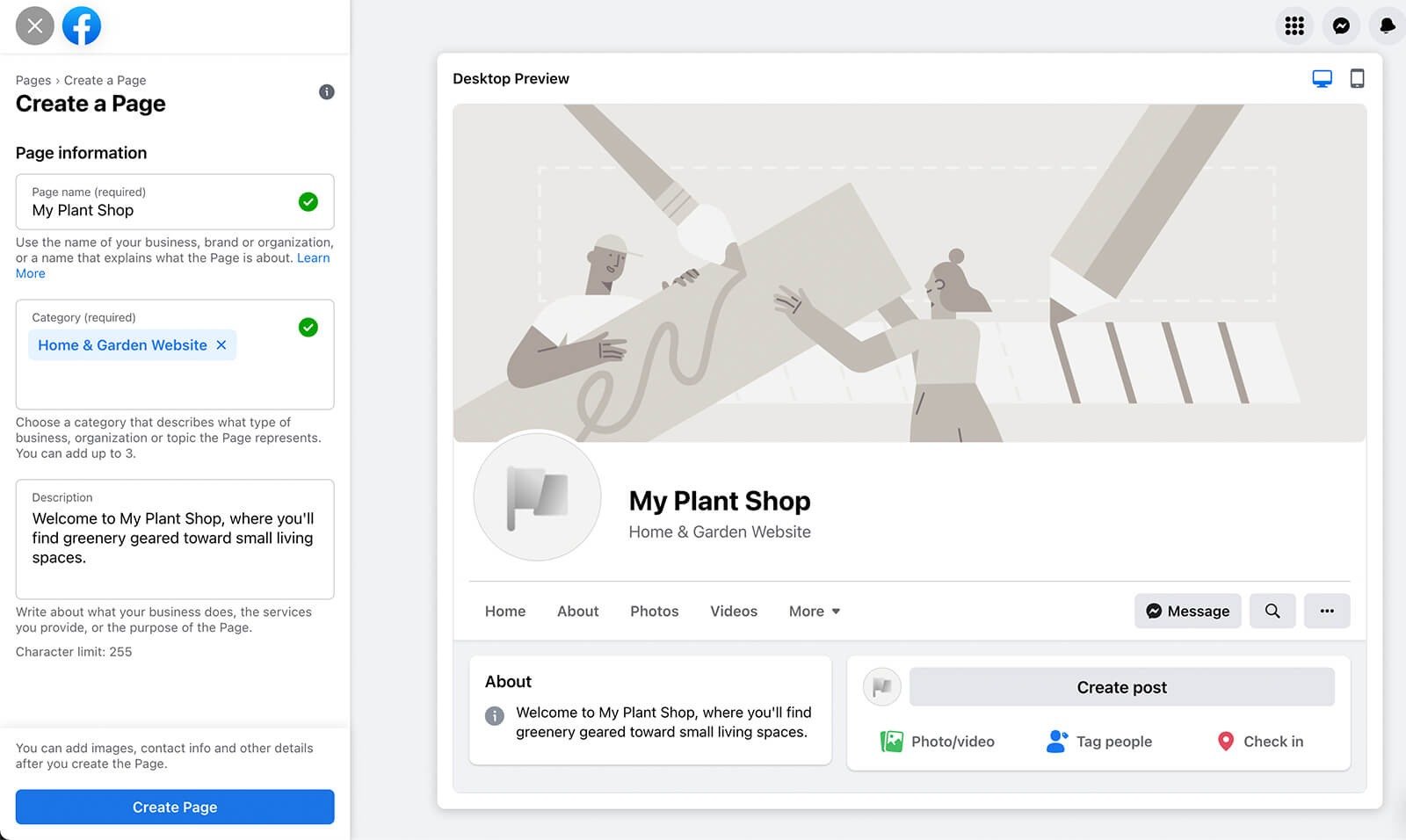
This guide breaks down exactly how Facebook Page monetization works in Kenya in 2026 — what qualifies, how payments actually reach you, realistic earnings, and a step-by-step plan to get your Page earning.
Key Takeaways
- Quick answer: To monetize a Facebook Page in Kenya, you need a Page (not just a personal profile) that follows Meta’s Partner Monetization Policies, is 18+, has at least 10,000 followers and 600,000 minutes viewed in the last 60 days for in-stream ads, and publishes original video content consistently.
- Kenya has had access to in-stream ads and ads on Reels since August 6, 2024, alongside other African markets like Nigeria, Ghana, Egypt, South Africa, and Rwanda.
- Facebook splits in-stream ad revenue 55% to the creator, 45% to Meta.
- Reported Kenyan Facebook view earnings sit roughly between $8 and $20 (about KSh 1,000–2,700) per 1,000 monetized views, though this varies by content type and audience.
- Facebook does not pay directly to M-Pesa. Payments go to a linked bank account (or a service like Payoneer), and you move funds to M-Pesa yourself.
- Beyond ads, Kenyan Pages can also earn through branded content deals, fan subscriptions where available, affiliate marketing, and selling products/services directly on the Page — none of which require Meta’s ad-monetization thresholds.
1. What Does It Mean to Monetize a Facebook Page?
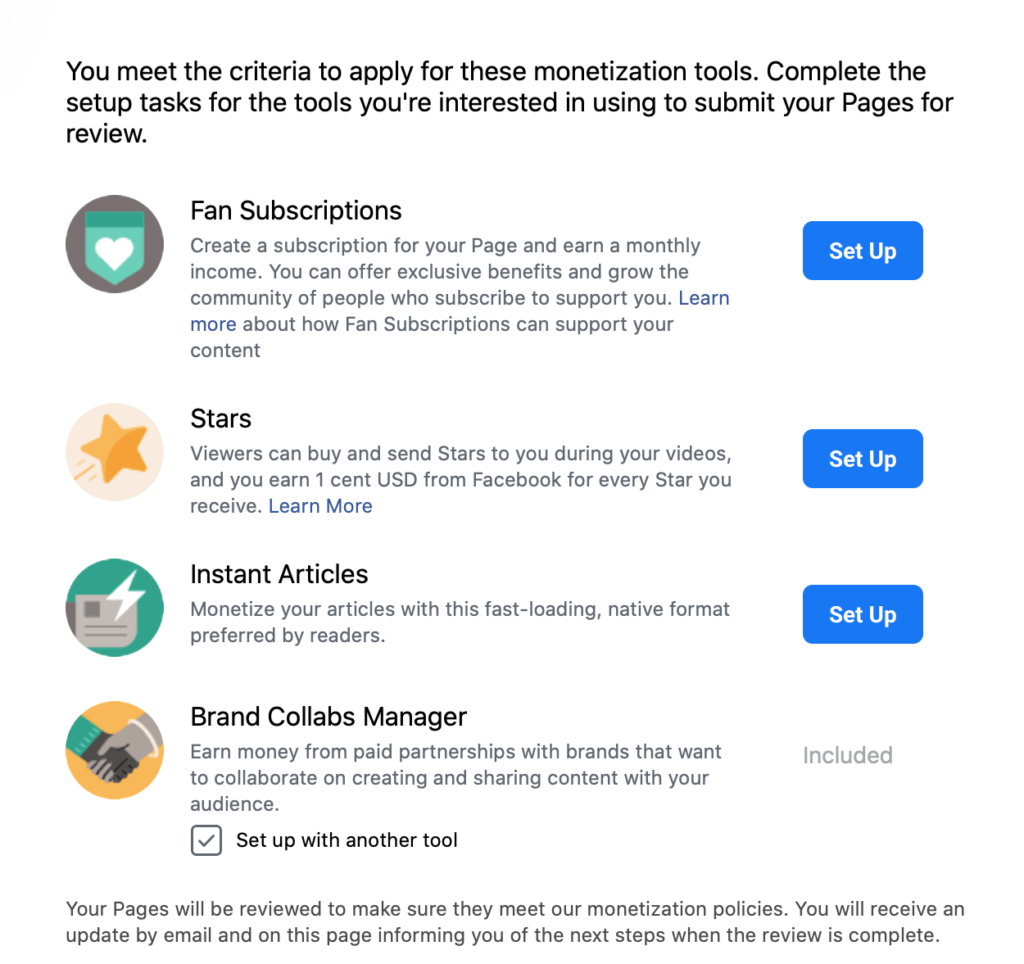
Monetizing a Facebook Page means turning your content, audience, and reach into actual income — either through Meta’s built-in tools (in-stream ads, Reels ads, bonuses) or through your own business activity on the platform (selling, affiliate links, brand partnerships).
Meta runs these native tools under its Partner Monetization Policies and Content Monetization Policies. They’re only available to creators in supported countries who meet specific eligibility benchmarks — and Kenya is one of the supported countries, but with narrower tool access than markets like the US, UK, or Canada.
It’s worth understanding upfront: monetizing a Page is not the same as monetizing a personal profile. Pages have slightly different requirements (for example, 3 active videos instead of 5), and most of Meta’s serious creator tools are built around Pages and Professional Mode profiles rather than standard personal accounts.
2. Facebook Page Monetization Requirements in Kenya (2026)
Core eligibility for in-stream ads
| Requirement | Threshold |
|---|---|
| Age | 18 years or older |
| Follower count | At least 10,000 Page followers (5,000 for a personal profile in Professional Mode) |
| Watch time | At least 600,000 total minutes viewed in the past 60 days |
| Active videos | At least 3 published videos on the Page (5 for a personal profile) |
| Country | Page must be based in an eligible country — Kenya qualifies |
| Policy compliance | No active Community Standards or Partner Monetization Policy violations |
Content-level rules
- Videos must generally run 3 minutes or longer to qualify for mid-roll ad placements — short clips under 3 minutes typically won’t earn in-stream ad revenue, even with high views.
- Content must be original. Reposted, recycled, or heavily reused content (stock footage with a generic voiceover, reposted viral clips) is routinely rejected or demonetized.
- Branded or sponsored content must be disclosed using Meta’s paid-partnership tools — undisclosed sponsorships can trigger monetization restrictions.
- Videos must comply with Facebook’s content eligibility standards for monetization (no excessive third-party content, no policy-violating material).
⚠️ Kenya-specific note: Not every Meta monetization tool available in the US or UK is live in Kenya. In-stream ads and ads on Reels are confirmed available to eligible Kenyan creators since August 2024. Other tools — such as fan subscriptions, Stars, or the newer unified Content Monetization program — are rolling out region by region, and availability can differ by tool. Always check your eligibility status directly in Meta Business Suite rather than assuming a feature is live, since Meta’s rollout schedule changes.
Quick Decision Tree
- Already have 10,000+ Page followers and post long-form video regularly? → Check your in-stream ads eligibility in Meta Business Suite now.
- Have an engaged audience but post mostly short clips? → Shift toward videos of 3+ minutes to unlock mid-roll ad placement, or focus on Reels bonuses instead.
- Under 10,000 followers? → Build audience first through consistent, original content — Page growth is the real bottleneck for most Kenyan creators.
- No video content at all? → Native ad tools won’t apply yet; start with affiliate links, product sales, or brand partnerships instead (see Section 6).
Read also: How to Earn From Facebook Stars in Kenya (2026 Guide)
3. How Facebook Ad Revenue Sharing Works
Unlike YouTube’s pooled Shorts model, Facebook’s in-stream ads work more directly: ads are placed within or around your specific videos, and you earn a share of what those particular ads generate.
- Meta sells ad space that appears before, during, or after your video (pre-roll, mid-roll, image ads, and post-roll ads).
- Revenue is split 55/45 — you keep 55% of the ad revenue generated on your content, Meta keeps 45%.
- Ads on Reels work similarly but are tied to Reels performance rather than long-form video watch time.
- Earnings are calculated monthly, with payouts typically processed around three weeks after the month closes, once your balance crosses the minimum payout threshold.
This is a more transparent, per-video model than YouTube Shorts’ shared pool — your earnings are tied directly to how your own content performs, not to a percentage of a global fund.
4. How Much Can You Realistically Earn in Kenya?
Be cautious of any number presented as guaranteed — actual earnings depend heavily on niche, audience location, and ad demand.
Typical Facebook view earnings in Kenya
Reported figures for Kenyan creators put in-stream ad earnings at roughly $8 to $20 per 1,000 monetized views (about KSh 1,000–2,700), though this range moves with advertiser demand, content category, and audience mix.
Realistic income scenarios
| Monthly monetized views | Estimated monthly ad revenue (KSh) | Notes |
|---|---|---|
| 100,000 | ~KSh 100,000 – 270,000 | Requires strong watch time, not just views |
| 500,000 | ~KSh 500,000 – 1,350,000 | Established Page with consistent long-form video |
| 1 million+ | ~KSh 1,000,000+ | Rare tier; usually combined with brand deals |
These figures are illustrative estimates, not promises — Facebook doesn’t publish a fixed rate, and per-1,000-view earnings vary by video length, audience country mix, and ad category. Treat them as a rough planning range, not a guarantee.
Why raw views aren’t the whole story
Because mid-roll ads require 3+ minute videos and a genuine watch-time threshold (600,000 minutes in 60 days), a Page with many short, high-view clips can struggle to qualify even with a large audience. Longer, retention-focused content tends to outperform short viral clips for ad-based income specifically.
5. How Payments Reach Kenya (M-Pesa, Banks, and Payoneer)
Does Facebook pay directly via M-Pesa?
No. Meta does not offer a direct M-Pesa payout option. Payments are made to a linked bank account, or in some cases through a third-party payment service such as Payoneer, which some Kenyan creators use to receive international payouts.
How Kenyan creators actually get paid
- Link a Kenyan bank account to your Meta payout settings inside Meta Business Suite (or a Payoneer account, where supported).
- Cross the minimum payout threshold — commonly cited around $100 — before a transfer is triggered.
- Payments are typically processed monthly, often between the 18th and 21st of the following month, though timing can vary.
- Move funds to M-Pesa yourself once they land in your bank account, using your bank’s M-Pesa integration (e.g., KCB M-Pesa, Equity Eazzy Banking) or a licensed aggregator.
Tax note
Income earned through Facebook monetization is taxable income in Kenya like any other earnings. Tax treatment depends on your individual circumstances and how the income is structured (personal vs. registered business). Consult a licensed Kenyan tax professional or the Kenya Revenue Authority (KRA) for guidance specific to your situation — this guide is not tax advice.
6. Step-by-Step: How to Start Monetizing Your Facebook Page
Step 1: Convert to a Page (or Professional Mode) if you haven’t already
Native monetization tools are built around Pages and Professional Mode profiles, not standard personal timelines.
Step 2: Publish consistent, original video content
Focus on videos of 3+ minutes where possible, since these qualify for mid-roll ads. Aim for a regular posting schedule — sporadic uploads slow down both growth and eligibility.
Step 3: Track your numbers in Meta Business Suite
Watch your follower count and your 60-day rolling watch-time total. You’re building toward the 10,000-follower and 600,000-minute thresholds.
Step 4: Check your monetization eligibility status
Go to Meta Business Suite > Monetization (or Creator Studio, where still available) to see your current eligibility status and any outstanding requirements.
Step 5: Apply for in-stream ads and Reels ads
Once eligible, follow the prompts to enable in-stream ads and ads on Reels. Meta reviews your Page for policy compliance before approving.
Step 6: Set up your payout method
Link a Kenyan bank account (or Payoneer account, where applicable) in your payment settings, and confirm your tax information.
Step 7: Diversify beyond ad tools
Layer in branded content deals, affiliate links, and direct sales through your Page — these don’t require the same follower or watch-time thresholds and often pay more per post than ad revenue alone (see Section 7).
7. Beyond Ad Revenue: Other Ways to Monetize a Facebook Page in Kenya
| Method | How it works | Best for |
|---|---|---|
| Branded content / sponsored posts | Businesses pay you to feature or promote their product on your Page | Pages with engaged, niche-specific audiences, even smaller ones |
| Affiliate marketing | Share product links (e.g., Jumia, Kilimall, or international affiliate programs) and earn commission on sales | Review, tutorial, or “recommends” style content |
| Selling products or services directly | Use Facebook Shops or simple posts to sell physical products, digital products, or services | Small businesses, creators with a tangible offer |
| Facebook Marketplace | List and sell items directly to local buyers | Businesses and individuals selling physical goods |
| Paid online events | Charge for access to a livestreamed class, workshop, or event | Educators, coaches, consultants |
| Driving traffic to other income sources | Use your Page to funnel followers to a website, WhatsApp channel, or paid community | Creators with an existing product or service outside Facebook |
Pro tip: Because native ad tools in Kenya have relatively high thresholds (10,000 followers, 600,000 minutes watched), many Kenyan Pages find branded content and direct sales more immediately achievable — you can land a sponsorship or make a sale with a much smaller, highly engaged audience than you’d need for in-stream ads to pay meaningfully.
8. Common Mistakes Kenyan Page Owners Make
- Posting only short clips. Content under 3 minutes doesn’t qualify for mid-roll ads, no matter how many views it gets.
- Reposting content without adding value. Recycled clips, stock footage with voiceovers, or reposted viral videos are routinely flagged and demonetized.
- Ignoring watch time in favor of chasing views. A video with a huge view count but very short average watch duration won’t move you toward the 600,000-minute threshold efficiently.
- Assuming every monetization tool is live in Kenya. Some features available in the US or UK haven’t rolled out locally yet — always verify in Meta Business Suite.
- Expecting direct M-Pesa payments. As covered above, payments route through a bank or Payoneer first.
- Undisclosed brand deals. Failing to tag sponsored content as a paid partnership can trigger policy violations that block monetization.
- Letting a single violation derail the Page. A Community Standards violation can pause monetization for a period even on an otherwise well-performing Page — stay strict about content compliance.
9. Content Ideas That Work for Kenyan Facebook Audiences
- Local news commentary and explainers — breaking down current events in an accessible way
- Personal finance and side-hustle tips — saving, small business advice, budgeting in KSh
- Comedy skits and relatable everyday content — Kenyan family, workplace, or matatu-life humor
- Cooking and lifestyle content — Kenyan recipes, home tips, DIY content
- Business and hustle showcases — behind-the-scenes of a small business, farm, or service
- Faith-based and motivational content — consistently strong engagement across Kenyan Facebook audiences
- Educational content — study tips, career guidance, skills tutorials
For ad monetization specifically, favor formats that naturally run longer — storytelling, tutorials, and commentary videos — over quick clips, since watch time is the real bottleneck.
10. Comparison: Facebook Page vs YouTube vs TikTok (Kenya)
| Factor | Facebook Page | YouTube (Long-form/Shorts) | TikTok |
|---|---|---|---|
| Revenue model | Direct — 55% creator share per video | Direct (long-form, 55%) or pooled (Shorts, 45%) | Varies by program/region |
| Entry barrier | 10,000 followers + 600,000 minutes/60 days | 500–1,000 subscribers + views/watch-hours | Varies; monetization access differs by country |
| Video length needed | 3+ minutes for mid-roll ads | Any length; watch hours matter for long-form | Short-form native |
| Kenya payout method | Bank / Payoneer → M-Pesa | AdSense → bank → M-Pesa | Varies; verify current TikTok Kenya monetization status |
| Best for | Existing engaged local audiences, business Pages | Long-term audience + ad income building | Fast discovery, younger audiences |
Bottom line: Facebook’s direct-payout model rewards Pages that already have loyal, watch-time-heavy audiences — it’s less about going viral once and more about sustained, longer-form content that keeps people watching.
11. Expert Tips to Grow and Earn Faster
- Prioritize 3+ minute videos if ad revenue is your goal — this single format decision determines mid-roll ad eligibility.
- Check your eligibility status weekly in Meta Business Suite rather than guessing whether you qualify.
- Use Facebook’s native video tools, not heavily watermarked reposts from other platforms — original uploads tend to get more favorable distribution.
- Study your retention graphs. If viewers drop off early, your hook or pacing needs work before you chase more views.
- Combine formats. Use Reels for discovery and reach, then convert new followers into long-form video viewers where the real ad revenue comes from.
- Build direct relationships with local brands in your niche — Kenyan SMEs are often more open to affordable, direct sponsorship deals with mid-sized Pages than global advertisers are.
12. Risks, Limitations, and Realistic Expectations
Risks:
- Policy violations (copyright, community standards, undisclosed sponsorships) can pause or revoke monetization.
- Meta’s tool rollout in Kenya is still narrower than in markets like the US or UK — some features you read about may not yet apply locally.
- Ad revenue is not fixed or guaranteed; it moves with advertiser demand and content performance.
- Currency conversion affects how much your USD-denominated earnings convert to in KSh.
Limitations:
- The 10,000-follower and 600,000-minute thresholds are a real barrier for smaller Pages — building toward them takes sustained effort.
- Facebook does not pay directly to M-Pesa; you need a bank account or a service like Payoneer.
- Not all Meta monetization tools (subscriptions, Stars, the newer unified Content Monetization program) are confirmed available to Kenyan creators yet — verify current access directly.
Realistic expectation: Building a Facebook Page to the point of meaningful ad income in Kenya typically takes sustained, consistent posting over many months, not weeks. Most Kenyan Pages that earn well combine ad revenue with branded content, direct sales, or affiliate income rather than relying on ads alone.
13. Frequently Asked Questions
1. Can I monetize a Facebook Page in Kenya? Yes. Meta rolled out in-stream ads and ads on Reels for eligible Kenyan creators starting August 6, 2024, and the program remains available in 2026.
2. How many followers do I need to monetize a Facebook Page? Generally at least 10,000 Page followers (5,000 for a personal profile in Professional Mode), alongside the watch-time and video-count requirements.
3. Does Facebook pay through M-Pesa directly? No. Payments go to a linked bank account or a service like Payoneer; you then transfer funds to M-Pesa yourself.
4. How much does Facebook pay per 1,000 views in Kenya? Reported figures put it at roughly $8–$20 (about KSh 1,000–2,700) per 1,000 monetized views, though this varies by content and audience.
5. Do my videos need to be a certain length to earn money? Yes — videos generally need to run at least 3 minutes to qualify for mid-roll in-stream ads.
6. Can I use reposted or recycled content? Not for monetization purposes. Facebook requires original content; reused clips without meaningful added value are routinely rejected or demonetized.
7. How is Facebook’s ad revenue split? Creators keep 55% of in-stream ad revenue; Meta keeps 45%.
8. What’s the minimum payout threshold? Commonly cited around $100, though you should confirm your specific threshold in your Meta payment settings.
9. Are Facebook Stars or fan subscriptions available in Kenya? Availability varies by tool and is still expanding region by region — check your eligibility status directly in Meta Business Suite rather than assuming access.
10. Is Facebook income taxable in Kenya? Yes, in principle — it’s income like any other. Consult KRA or a tax professional for guidance specific to your situation.
11. Can I monetize without native ad tools? Yes — branded content, affiliate marketing, Facebook Marketplace sales, and direct product/service sales don’t require the same follower or watch-time thresholds.
12. How often does Facebook pay creators? Typically monthly, often processed around three weeks after the month closes, once you’ve crossed the payout threshold.
13. What happens if my Page violates Community Standards? A violation can pause or restrict monetization, sometimes for a set period, until the issue is resolved — repeated or serious violations can result in permanent loss of monetization access.
14. Is monetizing a personal profile different from a Page? Yes — profiles typically need 5,000 followers and 5 active videos, while Pages need 10,000 followers and 3 active videos, though most serious creator tools are built around Pages.
15. Do I need a registered business to monetize a Facebook Page? No — a personal Meta account can operate a monetized Page, though some creators later register a business for tax, invoicing, and sponsorship purposes.
14. Final Checklist and Action Plan
Before applying for in-stream ads:
- [ ] Page has at least 10,000 followers
- [ ] At least 600,000 minutes viewed in the past 60 days
- [ ] At least 3 active, original videos published (mostly 3+ minutes long)
- [ ] No active Community Standards or policy violations
- [ ] Page is 18+ owned/operated
To get paid:
- [ ] Bank account (or Payoneer account) linked in Meta Business Suite payment settings
- [ ] Tax information submitted
- [ ] Eligibility confirmed under Meta Business Suite > Monetization
To grow sustainably:
- [ ] Posting consistently in a defined niche
- [ ] Favoring 3+ minute videos for ad eligibility
- [ ] Building at least one non-ad income stream (branded content, affiliate, direct sales) alongside native monetization
15. Conclusion
Monetizing a Facebook Page in Kenya is genuinely possible in 2026, but it rewards patience and consistency over quick virality. The clearest path runs through building a real, engaged audience, meeting the 10,000-follower and 600,000-minute watch-time thresholds, and enabling in-stream ads and Reels ads through Meta Business Suite — while routing payments through a Kenyan bank account or a service like Payoneer, since Meta doesn’t pay directly to M-Pesa.
For most Kenyan Page owners, the fastest realistic income doesn’t come from ads alone — it comes from combining ad revenue with branded content, affiliate links, and direct sales once you have an engaged, niche-focused audience.
Start with consistent, original video content today, track your numbers honestly in Meta Business Suite, and treat Facebook monetization as a long-term business, not a quick win.
Read also:
- How to Earn From Facebook Stars in Kenya (2026 Guide)
- How to Make Money With TikTok LIVE in Kenya (2026 Guide)
- How to Make Money with YouTube Shorts in Kenya (2026 Guide)
- How to Make Money With Instagram Reels in Kenya: The Complete 2026 Guide
TIMEBUCKS
Low minimum
payout of just
$3 — start
earning today!